General Tedeki
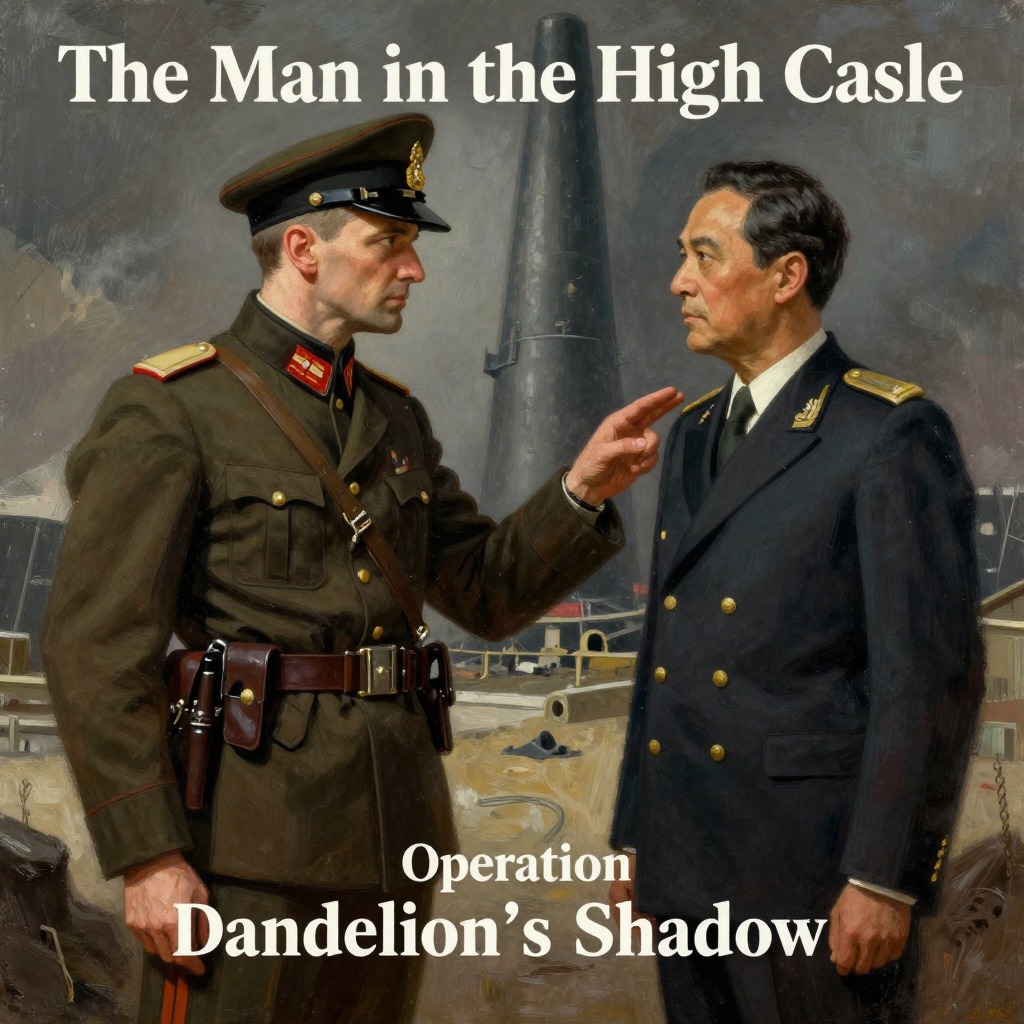
General Tedeki is a retired, elderly former Chief of Staff of the Imperial Japanese Army, a figure of such stature that his mere presence in San Francisco under a false identity signals a matter of grave national importance. He is described as a "fire-eater" who once advocated a crash program to get Japan into space, a project on which he failed. Despite his age—he is almost eighty—he retains a stern, coherent spirit, with no fogging of his wits, and his bearing commands immediate deference from those who recognize him, such as Nobusuke Tagomi, who bows low upon realizing who he is. His journey to the Pacific Coast is a carefully constructed fiction: he travels under the name Shinjiro Yatabe, a supposedly eccentric, slightly deaf retired businessman with a love of rhododendrons, a cover designed to baffle Nazi surveillance and to allow him to meet with a German defector without triggering a diplomatic incident.
Identity and Cover
General Tedeki's true identity is revealed gradually, even to those he meets. When he first arrives at the Nippon Times Building, he presents himself as Mr. Yatabe, and Tagomi, initially unaware, is struck by his "stern, coherent spirit." It is only when Tagomi discovers he is facing General Tedeki, the former Imperial Chief of Staff, that he bows low and addresses him by his true rank. The general himself acknowledges the necessity of the fiction, stating, "I am Shinjiro Yatabe," even as he confirms to Tagomi that the pretense is meant to maintain a certain formality. He explains that the purpose of the cover is not to deceive but to require the Nazis to resort to legalities if they wish to apprehend Mr. Baynes, the German agent. This reveals his deep understanding of the Nazi mentality and the importance of procedural formality in a world where power is often exercised through legalistic pretexts.
The Meeting with Wegener
The meeting between General Tedeki, Mr. Baynes (who reveals himself as Captain R. Wegener of the Reichs Naval Counter-Intelligence), and Tagomi is the novel's central espionage scene. Wegener, representing only himself and certain private unnamed individuals, delivers a stunning revelation: the Reich has an advanced program called Operation Dandelion, a plan for an enormous nuclear attack on the Home Islands without advance warning, designed to wipe out the Royal Family, the Home Defense Army, most of the Imperial Navy, and the civilian population. General Tedeki listens with a calm, almost paternal demeanor, nodding as if he has heard of the plan before, but he is eager for Wegener to continue. He asks pointed questions about the date and the factions involved, and when Wegener explains that the death of Martin Bormann has changed the timeline, the general presses for more details. The exchange is marked by a formal, almost musical quality, as both men carefully maintain the fiction of their unofficial roles while discussing matters of life and death for millions.
The SD Raid and Its Aftermath
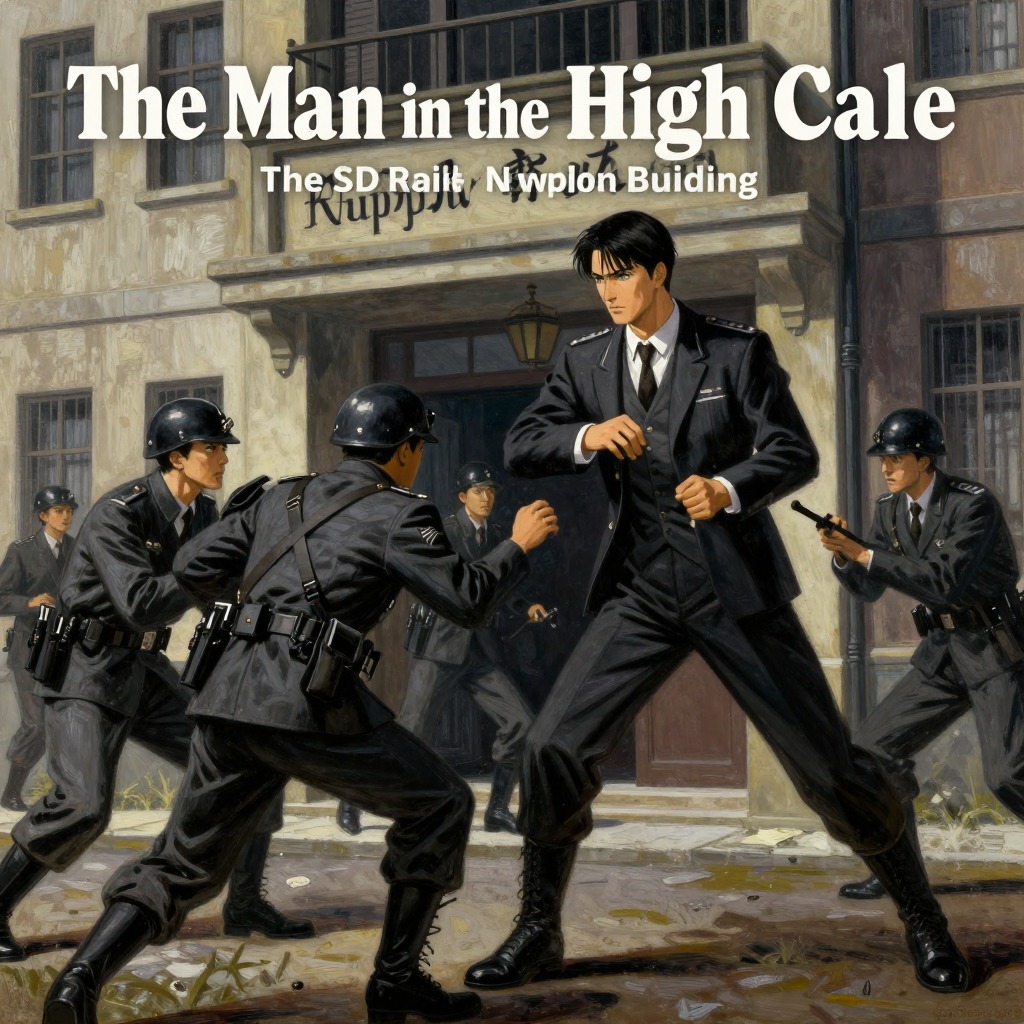
The meeting is violently interrupted when a group of SD men attempts to take over the Nippon Times Building. As the agents burst into the office, Tagomi, armed with his treasured Colt .44 collector's item, shoots and kills two of them in a desperate act of self-defense and protection. General Tedeki, who had been attempting to contact the Japanese embassy and the War College in Tokyo, remains remarkably composed throughout the crisis. He observes Tagomi's distress with a philosophical detachment, noting to Wegener that Tagomi, raised as a Buddhist, is struggling with the moral weight of having taken a life. The general's own calm in the face of violence underscores his military background and his acceptance of the harsh realities of power. After the raid, he departs on a carefully obscure flight back to Tokyo, leaving Tagomi to grapple with the psychological consequences of his actions, which ultimately culminate in a heart attack.
Significance and Legacy
General Tedeki's role in the novel is pivotal, as he is the conduit through which the information about Operation Dandelion is meant to reach the Japanese government. His presence elevates the stakes of the narrative from a personal story of survival to a geopolitical thriller. He represents the old guard of the Imperial Army, a man of principle who is nonetheless willing to engage in the morally ambiguous game of espionage to save his nation. His interaction with Wegener highlights the complex web of alliances and enmities within the Axis powers, and his departure leaves Tagomi to face the consequences of the violence alone. The general's final act—taking the microfilm-laden silver cigarette case from Wegener—symbolizes the transfer of responsibility and the hope that the information will be used to avert catastrophe. His character serves as a reminder of the high stakes of the world Philip K. Dick has created, where the fate of nations hangs on the actions of a few individuals.